
Comparing apartments pullman students actually consider is simpler than in a big city, and that is an advantage. There are fewer options, the distances are short, and the questions that matter are how you handle a Palouse winter and where you work when your room stops working.
What is a Pullman winter like off campus?
Cold, windy, and longer than newcomers expect. Pullman sits in open rolling country, so wind matters as much as temperature, and the walk that felt trivial in September becomes a real consideration in January.
Being minutes from Washington State University is what keeps a routine intact through that stretch. Students who live close keep going to class, the library and the gym; students with a longer trip quietly stop, and it shows by second semester.
Practically, plan for storage. Winter gear takes real space, and a unit with nowhere to put coats and boots gets cluttered fast. Ask where that space actually is on a tour, because it never shows up well in photos. Compare the layouts on our floor plans page.
Where do you study when your bedroom stops working?
Somewhere close enough that weather is not a factor. Working where you sleep functions for about eight weeks and then stops, usually right as the term gets heavy.
Private study rooms and a lounge give you two different modes — silence for the days you need to concentrate, and somewhere less formal for everything else. Printing stations are the detail that matters at the worst possible moment, which is the night something is due and your own printer has failed.
In a small town this matters more than it would in a city, because the alternatives close earlier and are further apart. A study space you can reach without going outside is the one you actually use in February.
What makes a small-town apartment feel less small?
Shared space that is genuinely good, and light. A rooftop lounge is an unusual thing to find in Pullman, and on a clear day the view across the Palouse is the reason to use it.
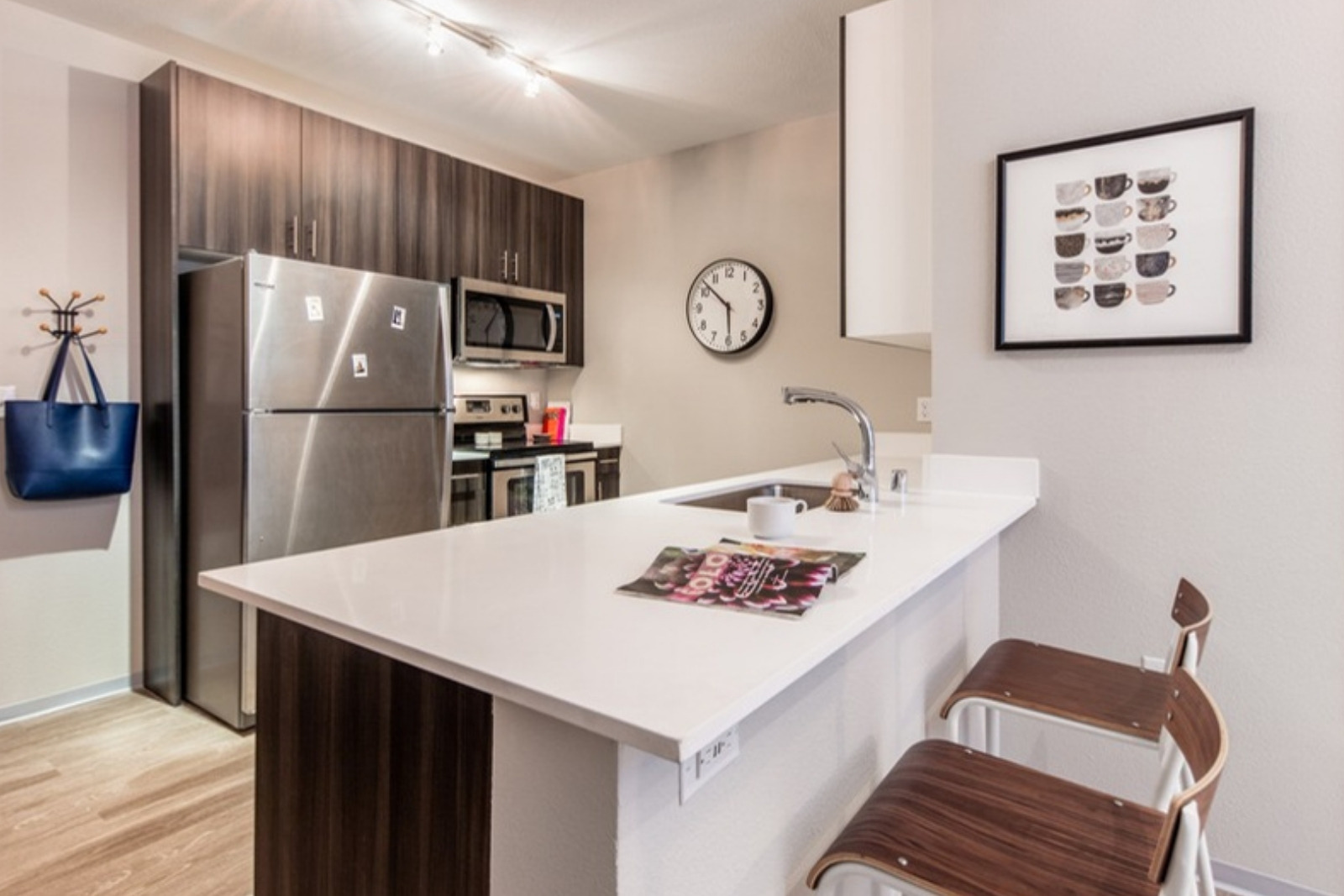
Modern furnishings in all units mean move-in is a car trip rather than a furniture budget, and kitchen islands with communal seating change how a shared apartment actually works — people gather in kitchens whether or not the floor plan intends it.
A relaxing sauna and tanning beds sound like extras and behave differently in a place with long dark winters. So does a 24-hour health and fitness center; accessibility is what determines whether you use it in December or just intend to.
What is worth setting up in your first month?
Groceries, a route to campus, and a study spot you will return to. Do it while the weather is still easy.
Late summer in Pullman is genuinely lovely, and moving is straightforward before the wind arrives. Use that window for the dull logistics rather than putting them off. Grilling stations and fire pits carry the early autumn, and a bike storage room makes cycling viable through the shoulder seasons, which in a town this size covers most of what you need.
Electronic community access and reserved onsite parking are the practical details worth asking about, along with how quickly maintenance responds. That answer tells you more about how a place is run than any amenity list. Our amenities page has the rest, and the gallery shows the spaces.
Frequently Asked Questions
Are apartments in Pullman walkable to WSU?
Many are within a short walk or a few minutes of Washington State University. Walk the route once in poor weather rather than on a clear day, since that is when the distance is felt.
How should I prepare for a Palouse winter?
Plan for wind, storage and short daylight. Somewhere to put gear and somewhere to work that is not your bedroom are the two things that matter most between November and March.
Do I need a car in Pullman?
Not for class if you live close. Bike storage covers the shoulder seasons and reserved onsite parking is available if you do bring a car.
What should I ask on a tour?
Ask about storage, heating, maintenance response times and what the study rooms are like when the building is full. Our contact page reaches the team.
Key Takeaways
- Judge apartments in Pullman on the January walk, not the September one.
- Winter gear storage is easy to overlook and impossible to add later.
- A study space you reach without going outside is the one used in February.
- Kitchen islands with seating change how a shared apartment actually works.
- Accessible indoor amenities are what keep a routine alive through a dark winter.